
Two new door styles just joined the narrow-rail lineup: Pacifica and Ventura. Both are flat-panel doors framed by a slim 5/16" applied moulding — about a third the width of a traditional slim shaker rail. The difference between them is the profile of that moulding: Pacifica's is radiused, Ventura's is square. That one detail decides whether the door reads soft and transitional or crisp and modern.
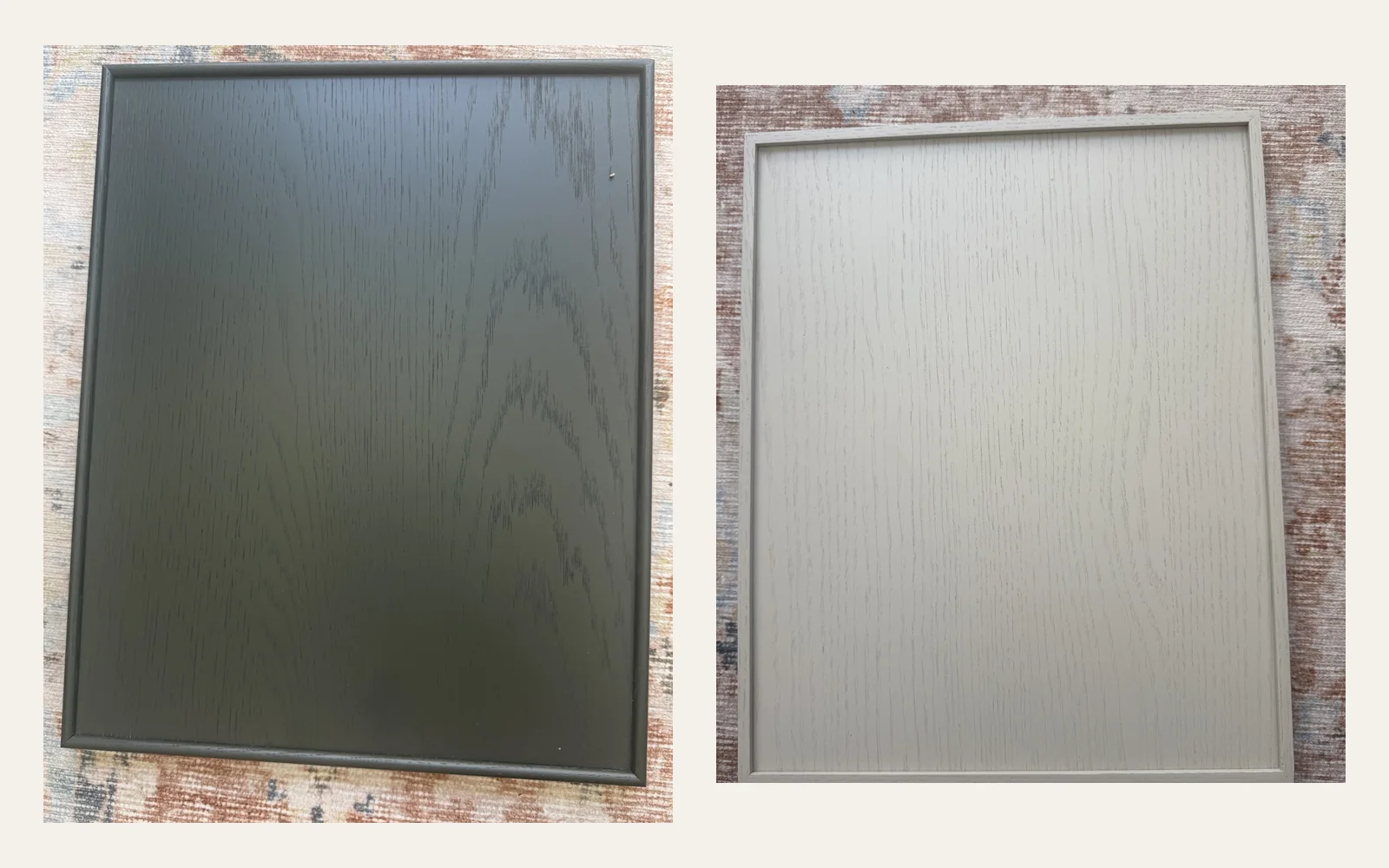
L–R: Pacifica in Deep Water White Oak, Ventura in Warm Stone White Oak.
The one-line pitch for clients
"It's the cleanness of a slab door with just enough of a frame to give it some shadow — a picture-frame edge instead of a chunky shaker rail."
That's the gap these two fill. Clients who find a slab too flat and a shaker too traditional — even a slim shaker — now have a door that sits right between them.
Pacifica: the radius moulding
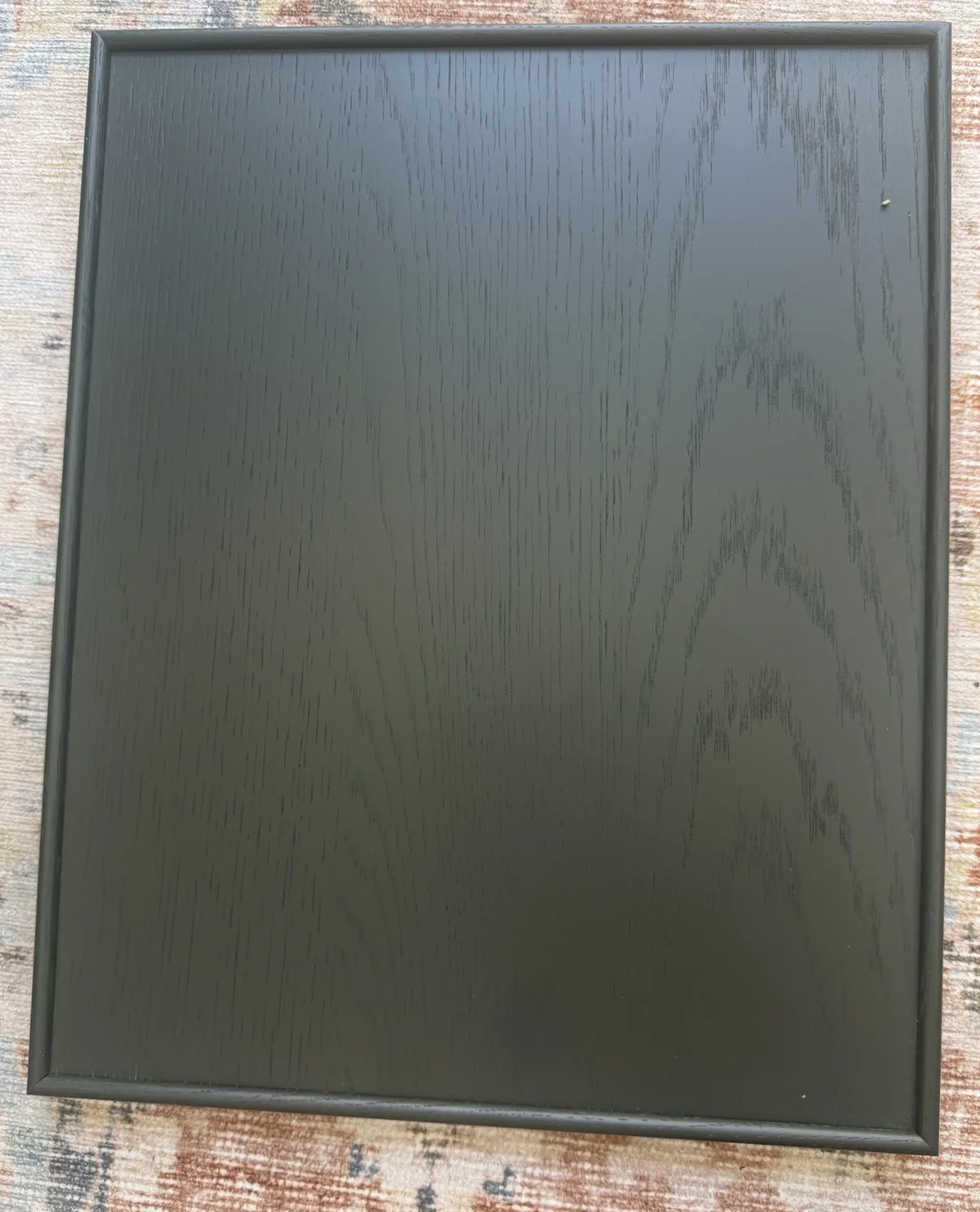
Pacifica in Deep Water White Oak.
Pacifica frames the panel with a 5/16" applied radius moulding on the sides, top, and bottom. The rounded profile catches light along its curve, so the frame reads softly — almost like a piece of furniture or a picture frame rather than a cabinet rail.
The sample above is in Deep Water, one of the heavy-pigment stains on White Oak. It's a strong pairing: the deep, saturated color reads almost painted from across the room, the oak's cathedral grain telegraphs through on the panel, and the radius edge keeps all that color from feeling heavy.
- Best for: transitional, coastal, and organic-modern kitchens; furniture-style vanities; built-ins and libraries; any client drawn to a softer look who has ruled out traditional shaker.
- Where it wins: statement islands and color-forward runs, where the rounded profile makes a saturated stain feel approachable.
Ventura: the square moulding
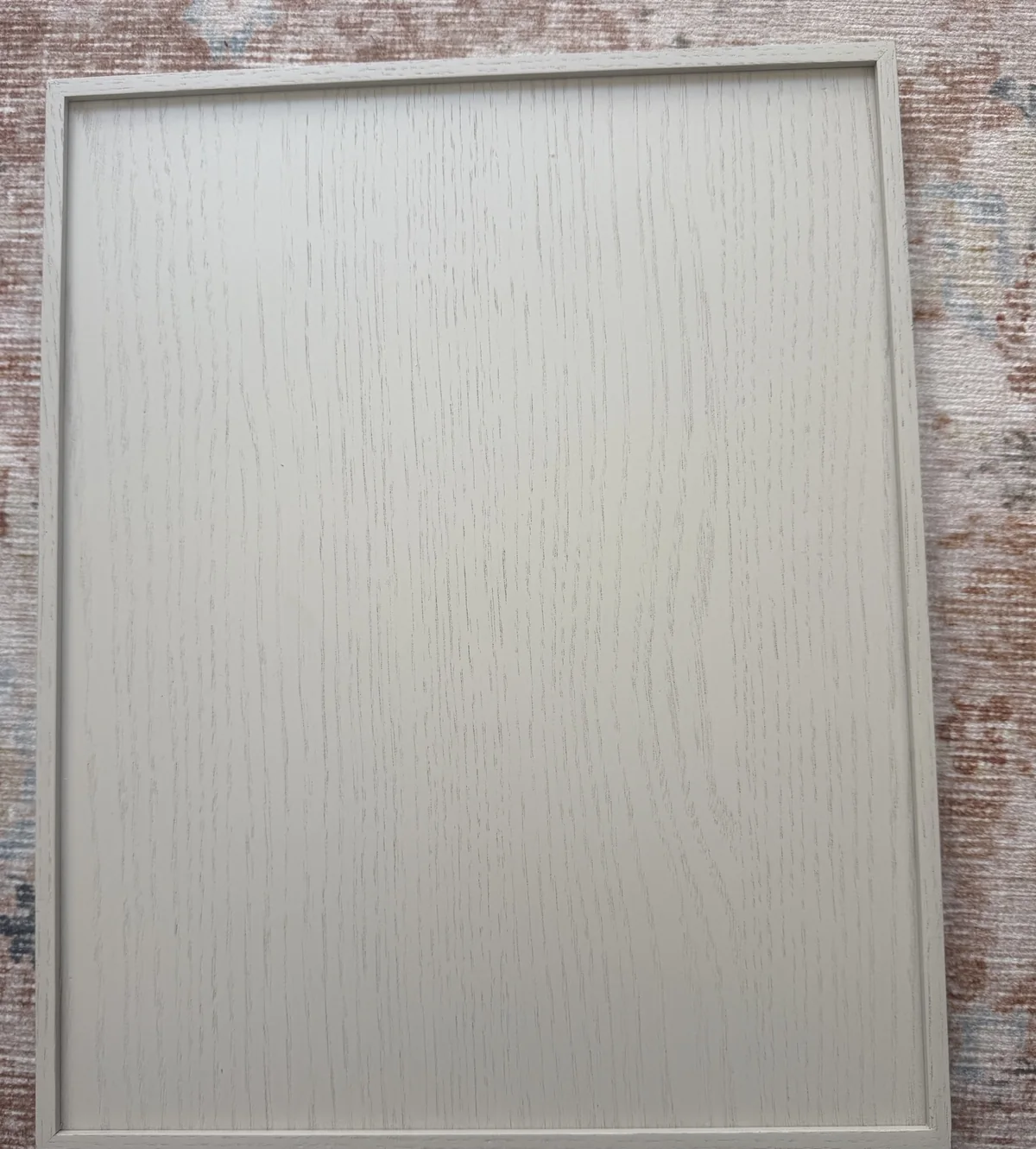
Ventura in Warm Stone White Oak.
Ventura uses the same 5/16" applied moulding width, but in a square profile. The edge is a crisp, hard line — a thin architectural reveal around the panel that reads as modern and precise.
The sample is in Warm Stone, the soft, warm cream from the same White Oak stain program. The grain shows through as a subtle texture and the square frame draws a fine outline around it: a light, quiet door that still has more depth than a flat slab.
- Best for: modern, minimalist, Japandi, and warm-contemporary kitchens; projects where a slab feels too plain but anything with a radius feels too traditional.
- Where it wins: full-kitchen perimeters in a light finish, tall pantry walls, and baths — anywhere you want a calm, tailored surface with a precise edge.
Pacifica vs. Ventura at a glance
| Pacifica | Ventura | |
|---|---|---|
| Door code | PCFA | VENT |
| Moulding | 5/16" applied radius — sides, top & bottom | 5/16" applied square — sides, top & bottom |
| Look | Soft, furniture-like, transitional | Crisp, architectural, modern |
| Door group | A | A |
| Door grain | Vertical only | Vertical only |
| Drawer front | DF-PCFA-V (vertical) / DF-PCFA-H (horizontal) | DF-VENT-V (vertical) / DF-VENT-H (horizontal) |
| Drawer front group | B | B |
| Panel | Veneered MDF substrate | Veneered MDF substrate |
Spec notes before you quote
These rules apply to both styles. Read them before you put either one in front of a client — a couple of them change how you design the kitchen.
- Doors and drawer fronts are not grain matched. If the client expects grain flowing continuously from a drawer stack into the door below, set that expectation now — or steer them toward a grain-matched program like the one in our Metro white oak walkthrough.
- Doors are vertical grain only. Drawer fronts can be ordered vertical or horizontal. On a horizontal-grain drawer bank next to vertical-grain doors, show the client a sample of both orientations together.
- Glass frame doors are different construction. Specify GFD. They're built as a 5-piece hardwood frame with 2 1/8" wide rails — much wider than the 5/16" moulding on the solid doors. Glass prep and installed glass clips are no charge, but the wider frame will look different next to the solid doors, so show that in the drawings.
- No mullion doors. Neither style is available as a mullion door.
- No edge profiles. The moulding is the detail; there are no edge profile options on either the door or drawer front.
- No rustic species. Neither style is available in rustic species.
- Rail tolerance: door rails may vary ±1/16" due to the manufacturing process.
Why these two are worth a spot in your showroom
- They fill a real gap. Slab, slim shaker, and shaker cover most clients, but there's a growing group who want something in between. Pacifica and Ventura are built for exactly that conversation.
- They make the White Oak stains look their best. A flat veneered panel is the best canvas for grain, and a thin applied frame adds shadow without competing with it. Deep Water and Warm Stone both read richer on these doors than on a busier style.
- One display, two stories. Show the two side by side and you've demonstrated how a single profile change takes the same door from soft to sharp. That's an easy way to get a client to tell you which direction they lean.
How to sample
Pinnacle Sales can get Pacifica and Ventura door samples into your showroom or onto a specific job. Request them through the dealer hub and tell us which finish you want them in — Deep Water and Warm Stone on White Oak, as shown here, or another finish from the program.
Spec questions
- Pinnacle Sales — for spec confirmation on a door style, species, and finish combination for a specific job, send the project through Submit a Request.
- W.W. Wood Products customer service — 573-624-3526 or customer.service@wwinc.com for direct door style and program questions.